
Outdoor Spaces Built to Last Decades
Exterior Remodeling in Chester for aging decks and weather-damaged trim that compromise safety and appearance
Vermont's freeze-thaw cycles, UV exposure, and moisture cause wood decking to crack, railings to loosen, and trim to rot behind failing paint. Smith's Enterprises handles full exterior upgrades including siding, trim, decking, and structural repairs that address both visible deterioration and underlying damage. The work uses premium materials like AZEK and Wolf trim, Trex decking, and RDI railing systems chosen for durability and resistance to weather conditions in Chester and Windsor County. Projects range from replacing a single deck to modernizing entire home exteriors with cohesive material selections across all elements.
The process involves identifying rot in structural framing, replacing compromised ledger boards and posts, installing new decking with proper spacing for drainage, and upgrading railings to current code requirements for height and baluster spacing. Trim work receives the same attention, with flashing installed to prevent water from reaching sheathing and materials selected to resist moisture without constant repainting. Composite decking materials like Trex eliminate splinters and seasonal maintenance while providing slip resistance and color retention.
Schedule a property walkthrough to evaluate structural concerns and discuss material options that improve both safety and long-term performance.
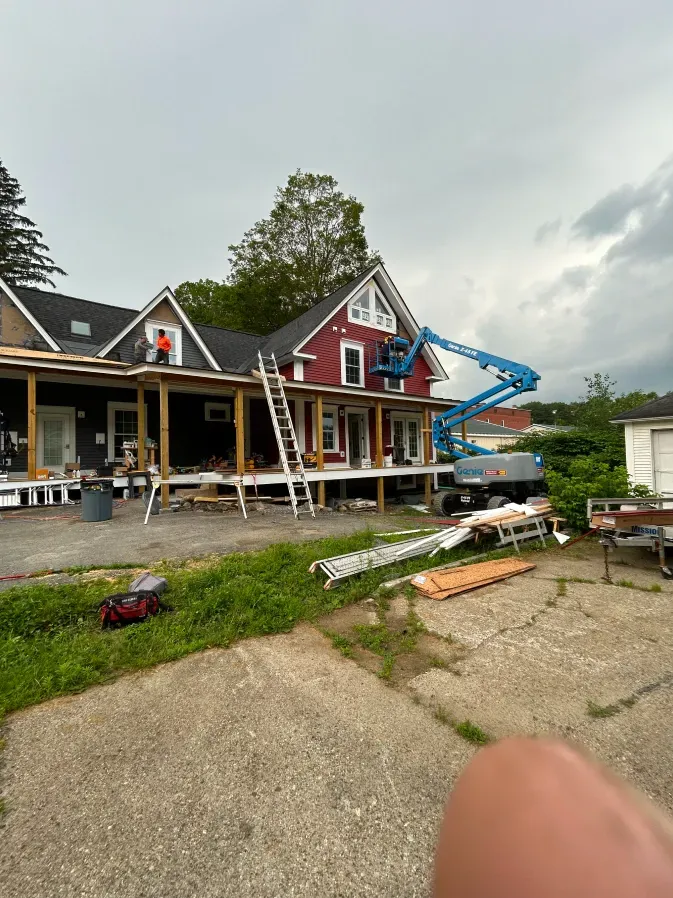
The Difference Between Temporary Fixes and Lasting Upgrades
Proper exterior remodeling addresses structural integrity before cosmetic improvements, ensuring joists and beams support new materials safely. Deck framing gets inspected for rot and insect damage, with sister joists or full replacements installed where wood has lost strength. Ledger board attachment receives particular attention because improper fastening or lack of flashing causes deck failures that result in collapse. Premium decking materials require specific fastening systems and joist spacing to meet warranty requirements and prevent sagging.
Once the remodel is complete, decks feel solid underfoot without bounce, railings don't flex when leaned against, and surfaces drain quickly after rain instead of puddling. Trim remains tight against siding through seasonal temperature changes, corners maintain clean lines without gaps, and materials resist fading from summer sun exposure. Outdoor living spaces become usable without concern about splinters, loose boards, or structural safety, and maintenance shifts from yearly staining to occasional cleaning.
Material choices affect upfront cost and long-term value, with composite decking and PVC trim costing more initially but eliminating the labor and expense of staining, painting, and replacing rotted wood every few years. Smith's Enterprises explains these trade-offs and helps clients understand how different materials perform under real-world conditions in Vermont's climate.
Common Questions About This Service
Homeowners planning exterior upgrades often need clarity on material longevity, structural safety, and how different products compare in performance and maintenance.
What causes deck failures in Chester homes?
Improper ledger board attachment, lack of flashing between the ledger and house, rot in structural framing from trapped moisture, and fastener corrosion from de-icing salt exposure combine to weaken connections and create collapse risk over time.
How do composite decking materials compare to wood?
Composite products like Trex resist rot, splinters, and insect damage, maintain color without staining, and carry warranties of 25 years or more, while wood requires yearly maintenance and typically shows significant deterioration within 10 to 15 years in Vermont's climate.
When should trim be upgraded during exterior remodeling?
Trim replacement makes sense when wood shows rot, when siding replacement exposes deteriorated window and door casings, or when switching to materials like AZEK or Wolf eliminates ongoing painting and prevents moisture damage at vulnerable corners and joints.
What railing materials meet code and resist weather damage?
RDI and similar composite or aluminum railing systems meet current code for height and baluster spacing, resist corrosion from moisture and road salt, and maintain strength and appearance without the seasonal tightening and refinishing that wood railings require.
Why does proper flashing matter for exterior trim?
Flashing directs water away from wood sheathing and framing, preventing the hidden rot that occurs when water migrates behind trim and siding, especially at horizontal surfaces like window sills and deck ledgers where water naturally accumulates.
Smith's Enterprises provides cohesive exterior solutions that address structural issues and improve appearance using materials proven to handle Vermont conditions. Arrange a site visit to review your exterior concerns and receive recommendations based on your home's specific needs and your timeline for improvements.