
Protection Designed for Vermont Winters
Roofing in Chester for aging shingles and weather damage that compromise home protection
Ice dams, wind-lifted shingles, and granule loss signal that a roof in Chester is nearing the end of its functional lifespan. Smith's Enterprises installs asphalt, composite, and standing seam metal roofing systems designed to handle Vermont's freeze-thaw cycles, heavy snow loads, and seasonal temperature swings. The team works with trusted materials including Owens Corning shingles and premium metal options, with experience in cold roof systems that incorporate ventilation strategies suited to this climate.
Installation addresses not just the visible roofing material but also underlayment, flashing around penetrations, and ventilation paths that prevent heat buildup in summer and ice dam formation in winter. Proper ventilation allows cold air to flow from soffit vents to ridge vents, keeping the roof deck temperature consistent and reducing the risk of snowmelt refreezing at eaves. Metal roofing sheds snow more effectively than asphalt, while composite shingles offer impact resistance against hail and falling branches common in wooded Windsor County properties.
Arrange an inspection to assess your current roof condition and discuss material options that match your home's structure and exposure.
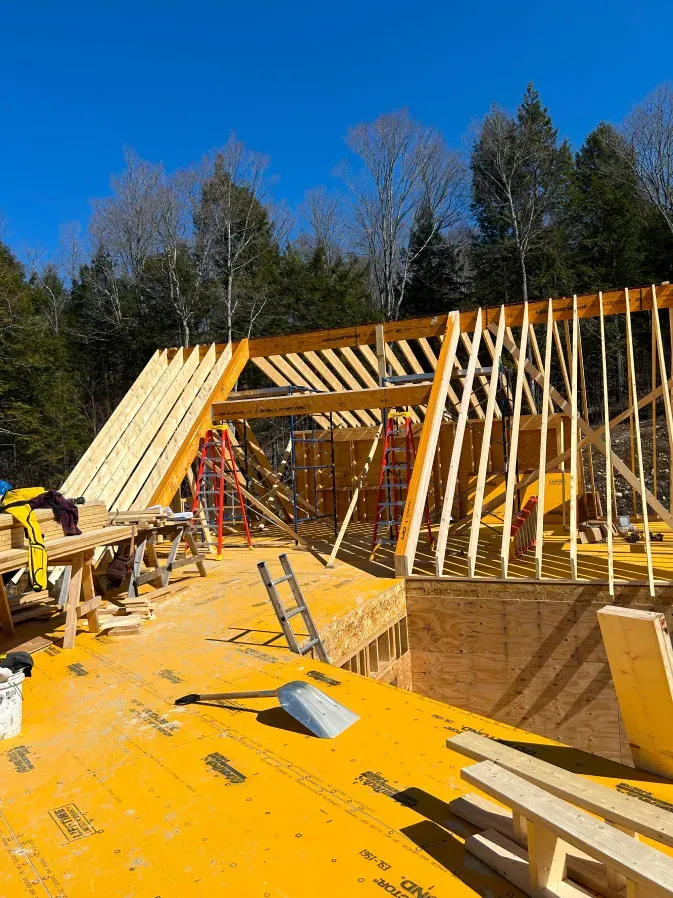
What Changes After Roof Installation Completes
The process involves removing old roofing down to the deck, inspecting and repairing sheathing as needed, installing ice and water barrier in vulnerable areas, laying underlayment across the entire roof, and fastening new roofing material with attention to manufacturer specifications for wind resistance and weather sealing. Flashing gets replaced around chimneys, skylights, and vent pipes to prevent water intrusion at these common failure points.
Once the roof is finished, you'll see uniform shingle alignment without lifted edges or gaps, metal panels that interlock securely without exposed fasteners, and valleys that channel water effectively toward gutters. Ice dams stop forming when ventilation works correctly, attic temperatures stay closer to outdoor temps in winter, and ceiling stains from previous leaks don't reappear after storms. The roof performs its primary job—keeping water outside—without requiring constant monitoring or temporary repairs.
Material choice affects longevity and maintenance requirements, with metal roofs typically lasting 40-plus years with minimal upkeep, while quality asphalt shingles provide 25 to 30 years of performance. Smith's Enterprises explains these trade-offs during the planning phase so you select a system that fits both budget and long-term plans for the property.
Answers to Frequent Service Questions
Property owners in Windsor County often need clarity on material performance, ventilation requirements, and timing before committing to a roof replacement.
What roofing material handles Vermont weather best?
Standing seam metal resists ice dam formation, sheds snow effectively, and withstands high winds, while architectural asphalt shingles with high wind ratings and impact resistance perform well when properly installed with adequate ventilation to prevent premature aging from heat buildup.
How does a cold roof system prevent ice dams?
Cold roof design maintains consistent roof deck temperature by allowing ventilation air to flow from eave to ridge, preventing snow from melting on the upper roof and refreezing at the colder eaves where it forms dams that back water under shingles.
When should I replace rather than repair my roof?
Replacement makes sense when shingles show widespread granule loss, multiple leaks exist in different areas, the roof has reached 20-plus years of age, or previous repairs haven't solved recurring problems caused by systemic ventilation or flashing failures.
What underlayment and flashing details matter most?
Ice and water barrier installed at eaves and valleys prevents leaks from ice dams, while step flashing at wall intersections and counter flashing at chimneys must be installed in the correct sequence and properly sealed to keep water from migrating behind roofing materials.
Why do installation methods affect roof longevity?
Correct fastener placement, proper shingle exposure, adequate ventilation space, and attention to flashing details determine whether a roof performs for its expected lifespan or fails prematurely due to wind damage, moisture trapped in the roof deck, or water intrusion at transitions.
Smith's Enterprises ensures proper ventilation and uses installation techniques proven to handle the weather conditions typical in Chester and surrounding Windsor County areas. Schedule a roof evaluation to discuss material options and timing that fits your home's needs and your planned timeline.