
Structural Problems That Compromise Safety
Rot Repair & Framing in Chester for load-bearing components compromised by moisture damage
When water intrusion goes undetected, wood framing loses its structural capacity through fungal decay that softens load-bearing members and threatens building stability. Smiths Enterprises handles severe structural rot repair and load-bearing framing replacement in Chester, addressing compromised floor systems, wall frames, and roof structures that no longer meet required load capacities. Every project begins with moisture source investigation to identify ongoing leaks, condensation patterns, or drainage failures that caused the original deterioration.
The work involves structural integrity assessment to determine which members require sister reinforcement versus complete replacement, followed by temporary shoring to support loads during reconstruction. Vermont's freeze-thaw cycles accelerate rot in any framing exposed to persistent moisture, making early intervention critical before damage extends beyond the initially affected area.
Schedule a structural assessment to document existing damage and identify active moisture sources.
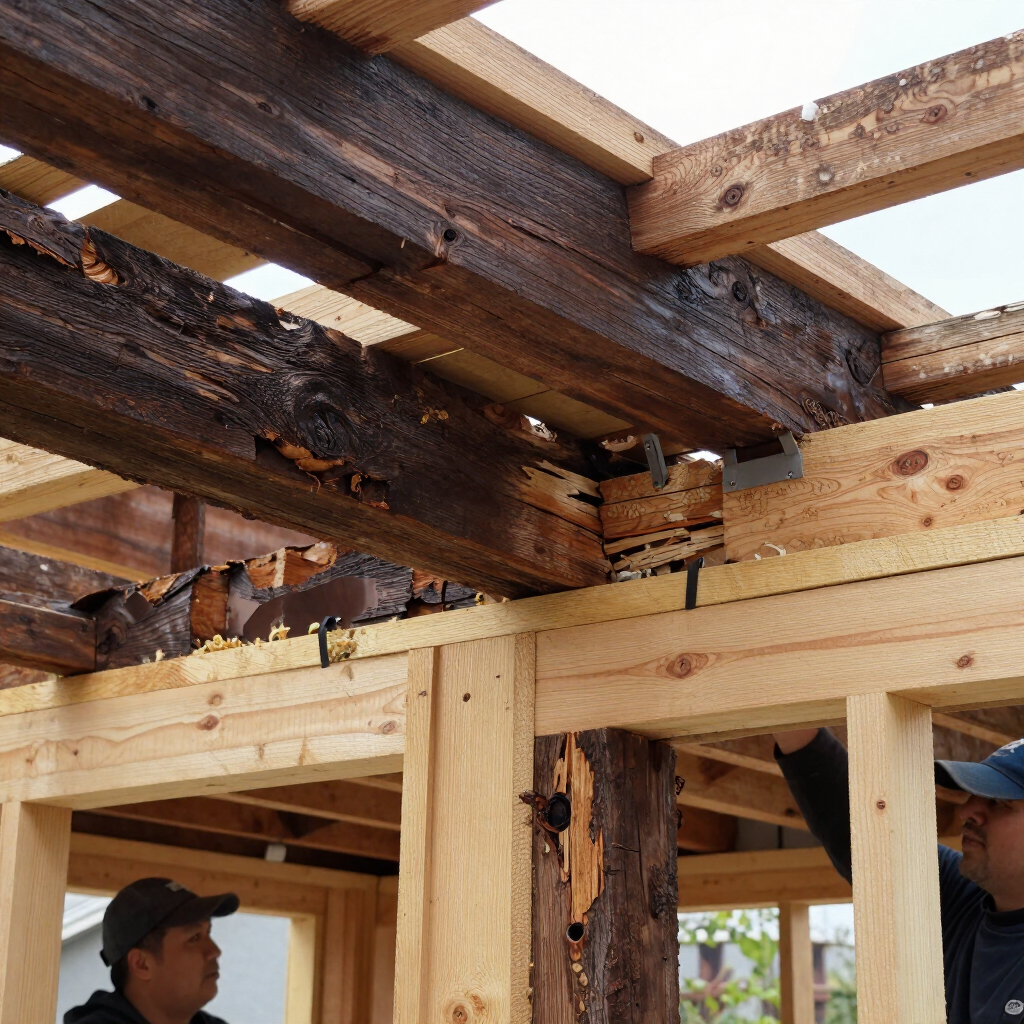
What Happens During Structural Rot Repair
Your property receives a documented evaluation that identifies the extent of affected framing, measures remaining structural capacity, and traces moisture pathways to their origin points. Temporary support systems transfer loads away from compromised members before removal begins, and replacement framing matches or exceeds original design loads using pressure-treated or naturally rot-resistant lumber specified for the exposure condition.
You see walls that return to plumb, floors that no longer sag or feel spongy underfoot, and roof structures that maintain their designed slope without visible deflection. Framing repairs completed by Smiths Enterprises include before-and-after documentation for insurance claim support, along with local building code compliance verification that satisfies municipal inspection requirements.
The work also addresses the moisture source itself, whether through flashing corrections, drainage improvements, or ventilation upgrades, so new framing remains protected from the conditions that caused the original failure. Structural repairs often require coordination with licensed engineers when alterations affect load paths or when assessment reveals damage more extensive than visible indicators suggested.
Questions Property Owners Ask Before Repairs
Framing problems raise immediate concerns about safety, cost, and how quickly deterioration progresses once discovered.
How do you determine which framing members need replacement versus reinforcement?
Structural assessment measures remaining cross-sectional area and tests for softness using a probe or awl, with replacement required when decay reduces load capacity below code minimums and sister reinforcement acceptable when sufficient sound wood remains for mechanical fastening.
What building code requirements apply to structural framing repairs in Chester?
Vermont residential code requires that replacement framing match or exceed original design loads, with pressure-treated lumber mandatory for sill plates and any members within eighteen inches of exposed grade, and engineered lumber acceptable as equivalent to dimensional lumber when span tables confirm adequate capacity.
How long does structural rot repair typically take?
Duration depends on the number of affected members and access complexity, with a single rotted sill section often completed in one to two days while multi-joist floor system replacement or full wall reframing extends to one or two weeks including temporary shoring and phased reconstruction.
What documentation do insurance companies require for rot damage claims?
Most carriers want photographic evidence of the damaged framing with measurements showing decay extent, a written assessment identifying the moisture source and timeline, and itemized repair estimates separating structural work from cosmetic restoration, with stronger claims tied to sudden events rather than long-term maintenance neglect.
Why does rot often extend beyond what's visible from the interior?
Fungal decay spreads through concealed joist bays and wall cavities where airflow is limited and moisture accumulates unnoticed, so exploratory openings during assessment frequently reveal additional affected framing hidden behind intact finish surfaces that showed no exterior symptoms.
Smiths Enterprises provides detailed repair proposals that separate investigation costs from actual reconstruction, allowing you to understand findings before committing to full remediation. Request an evaluation that includes moisture source identification and structural load assessment.